When you finally get into bed after a long day in your Turkish apartment, you pull the duvet over yourself, adjust your pillow, and shift around to get comfortable. While this seems relaxing, these simple movements are actually launching a massive, invisible cloud of allergens directly into the air you breathe.
A groundbreaking clinical study published by the official scientific journal of the American Academy of Allergy, Asthma & Immunology (AAAAI)—The Journal of Allergy and Clinical Immunology (JACI)—revealed paradigm-shifting facts about indoor allergen exposure. Scientists used specialized nasal air samplers to measure exactly how much dust mite allergen (Der p1) asthma patients inhale during the night. The results pinpointed the most dangerous time for your lungs: the moment you get into bed.
The 30-Minute Danger Zone
According to the JACI clinical research, the amount of dust mite allergen inhaled in the first 30 minutes following bed entry is a highly accurate predictor of a person's exposure throughout the entire night. The study proved beyond a doubt that this initial half-hour sets the stage for the rest of your sleep.
Every time you move your unprotected duvet or press your head into your pillow during those first 30 minutes, you force microscopic mite feces out of the fabric. This sudden cloud of allergens is what triggers severe morning congestion, red eyes, and nighttime asthma attacks.
The Scientific Fix: Total Bedding Encasing
In the study, researchers tested the effect of completely encasing mattresses, pillows, and duvets. The clinical outcome was highly successful: Encasing the bedding reduced the amount of inhaled allergens by nearly half (a 1.8-fold reduction).
This massive drop in allergen exposure resulted in a highly noticeable and medically significant improvement in both asthma and allergy symptom scores.
However, the study also noted that while encasing dramatically reduced symptoms by physically trapping the allergens, it didn't completely normalize overall lung function tests. Why? Because your lungs are still exposed to other airborne particles floating in the room, such as Turkey's winter coal smog or pet dander.
The Allerworx Ultimate Sleep System
To effectively protect your respiratory health based on this AAAAI clinical research, you must rely on a two-step medical defense:
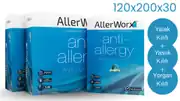
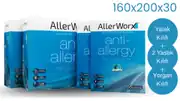
- Encase Everything: Use Allerworx 100% premium woven cotton encasements to completely seal your mattress, pillows, and your duvet. This physically traps the allergens, stopping the "30-minute allergen cloud" from ever reaching your face.
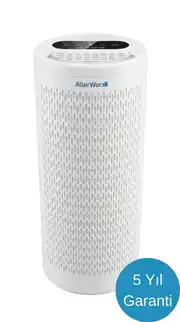
- Purify the Air: To support overall lung function and capture external airborne pollutants, pair your encasements with the Allerworx UL 40 True HEPA Air Purifier. Running it on sleep mode ensures the remaining air in your bedroom is pristine.
Comparison Guide: The First 30 Minutes
| Feature | Unprotected Bedding | Allerworx 100% Cotton Encasements |
| The First 30 Minutes | Direct exposure to a massive allergen cloud | Allergens are physically trapped inside the bed |
| Inhaled Allergens | Maximum exposure levels | Reduced by nearly half |
| Asthma Symptoms | Triggers nighttime coughing and congestion | Visibly and significantly reduces symptoms |
| Protection Scope | None (Allergens flow freely) | 360-degree zippered seal on mattress, pillow, and duvet |
Frequently Asked Questions (FAQ)
What is Der p1?
Der p1 is one of the primary proteins found in the feces of house dust mites. It is globally recognized as one of the most common and potent triggers for allergic asthma and rhinitis.
Do I really need to encase my duvet as well?
Yes. According to the clinical research published by JACI, the significant reduction in asthma symptoms was achieved by encasing the mattress, the pillows, AND the duvet. Duvets hold massive amounts of dust mites and constantly push air (and allergens) into your face when you move them.
Are cotton encasements a cure for asthma?
No, encasements are not a medication. They are an environmental control method. By cutting off your physical contact with allergens, they visibly reduce the severity of asthma and allergy attacks, vastly improving your quality of life.
Scientific Reference: The findings in this article are based on clinical research published by the official scientific journal of the American Academy of Allergy, Asthma & Immunology (AAAAI), The Journal of Allergy and Clinical Immunology (JACI).
Title: "The Impact of Bedding Encasing on Nocturnal Der p1 Exposure and Asthma"
Read the full study: https://www.jacionline.org/article/S0091-6749(04)00294-5/fulltext