For individuals with allergic asthma or dust mite sensitivities, choosing the right bedding is a critical decision that directly affects daily comfort and respiratory health. The market is filled with mattress covers and protectors claiming to be "anti-allergy." However, from a medical standpoint, not all fabric structures provide the same level of protection.
So, how do you choose the right material for your health? The answer lies in scientific tests published in The Journal of Allergy and Clinical Immunology (JACI), the official journal of the American Academy of Allergy, Asthma & Immunology (AAAAI). Let’s explore the clinical findings and microscopic evidence on how different fabrics interact with dust mites.
Microscopic Evaluation of Fabric Structures
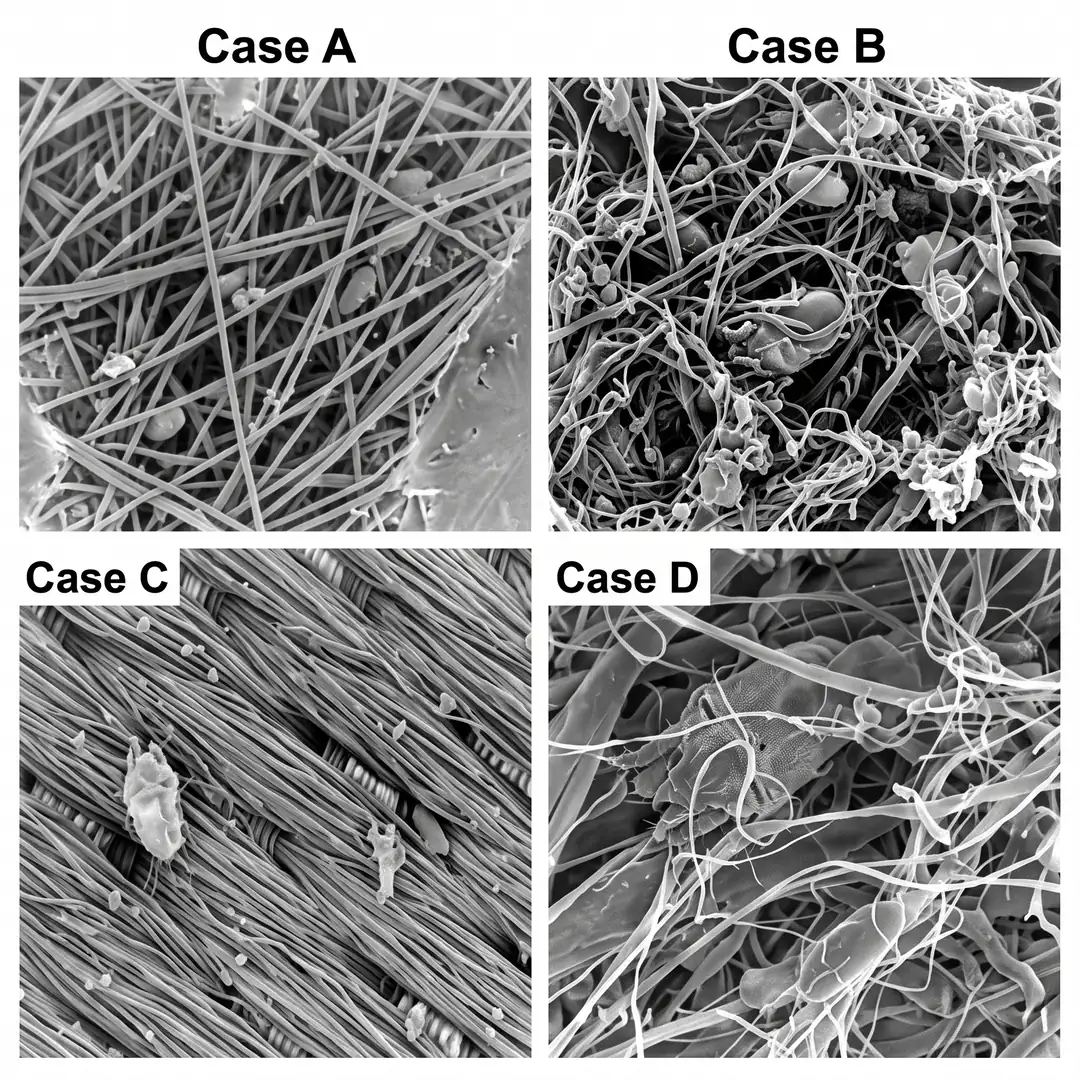
In a comprehensive study published in JACI, researchers led by Vanna Mahakittikun tested various "mite-proof" materials (including nonwoven, plastic-coated, and tightly woven fabrics) using a specialized Siriraj chamber method. The goal was to observe the behavior of live dust mites when in contact with these fabrics under an electron microscope.
The findings demonstrated that the manufacturing technique of the fabric is the most critical factor in creating an effective allergen barrier:
1. The Structure of Nonwoven Fabrics
Nonwoven fabrics are made by pressing synthetic fibers together without weaving. Clinical observations in the study showed that due to the loose and irregular fiber structure of these materials, live dust mites were able to penetrate the fabric. Under microscopic examination, mites were actually seen nesting and colonizing within the inner matrix of the nonwoven fibers.
2. The Protective Barrier of Tightly Woven Cotton
When high-density "Woven" fabrics were tested in the same study, the results were vastly different. The tight weaving technique minimizes the microscopic gaps between the threads. Medical tests conclusively proved that dust mites could not penetrate the tightly woven fabrics and were completely blocked on the surface.
The conclusion of the research report offers a very important recommendation: Woven covers are highly recommended because of their major advantages—they do not allow mite colonization within the fabric, they provide breathability for sleeping comfort, and they are easy to clean.
Why Allerworx Exclusively Uses Tightly Woven Cotton
The scientific evidence is clear: for genuine hypoallergenic protection, a fabric must prevent allergens from embedding into it, allowing them to remain on the surface where they can be easily washed away.
At Allerworx, we do not use synthetic nonwoven materials in our encasements. Our products are engineered using the high-density, tightly woven 100% premium cotton technology recommended by international clinical research. This ensures your mattress breathes naturally while scientifically preventing microscopic allergens from nesting in your bed.
Comparison Guide: Fabrics Based on Clinical Findings
| Fabric Type | Manufacturing Structure | Microscopic Mite Test Result | Medical Suitability |
| Nonwoven | Pressed synthetic fibers | Mites can penetrate and colonize inside the fibers | Vulnerable to internal allergen buildup |
| Plastic/PU Coated | Synthetic film layer | Blocks mites but completely stops airflow | Reduces comfort by causing nighttime sweating |
| Tightly Woven Cotton | High-density interlaced threads | 100% blocks mites from penetrating[cite: 1, 3] | Highly recommended; breathable and easy to clean[cite: 2] |
Scientific Reference: The findings in this article are based on clinical research led by V. Mahakittikun and published in The Journal of Allergy and Clinical Immunology (JACI), the official scientific journal of the American Academy of Allergy, Asthma & Immunology (AAAAI). Read the full clinical study: https://www.jacionline.org/article/S0091-6749(03)02208-5/fulltext
👉 Discover Allerworx Tightly Woven Cotton Encasements